
If you’re an educator, parent, or community leader interested in STEM (science, technology, engineering and math) you need to know about rapid prototyping and digital fabrication. According to the English WikiPedia:
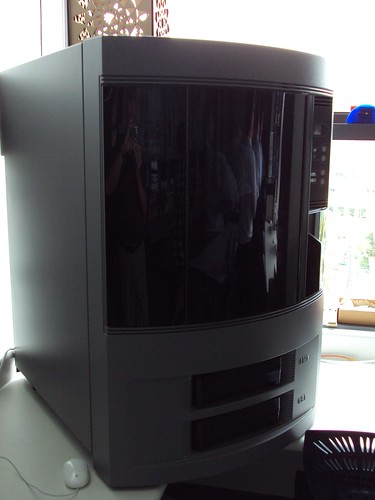
A digital fabricator (commonly shortened to fabber) is a small, self-contained factory that can make objects described by digital data. Fabbers make three-dimensional, solid objects that can be used as models, as prototypes, or as delivered products. They are widely used by manufacturers for these purposes. Fabbers use a wide range of techniques to make products from a wide range of materials. The quality of these materials and the precision of fabrication can be a major constraint on functional applications.
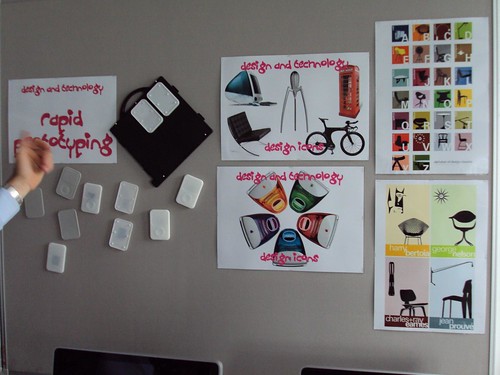
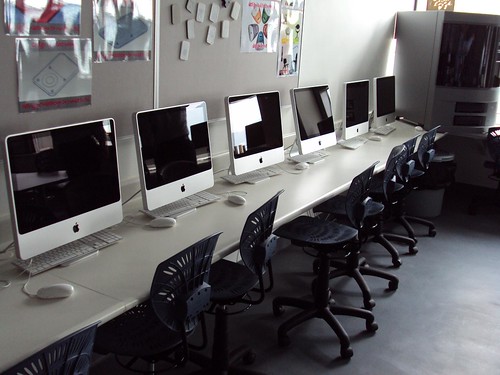
In September of 2009, when I was in Hong Kong for the 21st Century Learning @ Hong Kong Conference, I had an opportunity to learn about “rapid prototyping” and see some of the equipment used by students at Discovery College (a private K-12 school in Hong Kong) to actually “make stuff” using these processes. WikiPedia defines rapid prototyping as:
…the automatic construction of physical objects using additive manufacturing technology. The first techniques for rapid prototyping became available in the late 1980s and were used to produce models and prototype parts. Today, they are used for a much wider range of applications and are even used to manufacture production-quality parts in relatively small numbers. Some sculptors use the technology to produce complex shapes for fine arts exhibitions.
In my work at the University of North Texas this semester teaching “Computers in the Classroom,” I’ve learned a bit about the work underway involving NCTM, AMTE, SITE, ITEEA, and ISTE to author a NSF grant supporting digital fabrication in K-12 schools. The following two minute, forty second video by Daniel Tillman provides an overview of digital fabrication as well as excerpts from Karen Cator‘s recent comments in Washington DC at the National Technology Leadership Summit about our need for this technology in our schools today.
The website digitalfabrication.org has been created by educators at the University of Virginia to provide resources, tutorials, and assistance to others interested in digital fabrication. A Diigo group for digital fabrication has been created, as well as a Ning site “for those tinkering with Fab Labs.”
My own work with Scratch software together with preservice teachers this semester at UNT drives home the importance of computational thinking and REAL engineering activities for our students. I hope to learn more about digital fabrication this semester at UNT, and will be sure to pass along what I can.
Imagine classroom lessons with your own students, in which everyone is able to create and rapidly manufacture objects using (essentially) specialized computer software and fancy printers. That’s digital fabrication. I hope the NSF grant writing of the organizations depicted in Daniel’s video is successful!
Technorati Tags:
digital, education, engineering, iste, math, schools, science, site, stem, technology, fabrication, rapid, prototyping, karen, cator, nctm, iteea, nsf
If you enjoyed this post and found it useful, subscribe to Wes’ free newsletter. Check out Wes’ video tutorial library, “Playing with Media.” Information about more ways to learn with Dr. Wesley Fryer are available on wesfryer.com/after.
On this day..
- Staying On Message in the Classroom After the Election – 2016
- 15 Reasons I’m Thrilled to be a Grade 4-5 STEM Teacher in Yukon, Oklahoma – 2013
- Blogging the Conference: EDUCAUSE 2012 Session Notes – 2012
- Janet Barresi’s ODLA 2011 Keynote – 2011
- How to Make Your High School Students Fail Online Courses – 2011
- Join in 12 Days of Playing with Media – 2011
- 1000s of Universities now using Podcast Generator – 2010
- A sad (but true) video commentary on higher education publishing – 2010
- Broad, Sweeping Company Facebook policy challenged – 2010
- Language over Native American forced re-location matters – 2010
Comments
2 responses to “Rapid Prototyping, Digital Fabrication, STEM, NSF and Karen Cator”
Great article, although I think the wikipedia link to “rapid prototyping” is too software centric. For instance, someone at IDEO, the world famous design firm, would argue for a more holistic definition of rapid prototyping. To me, this provides a more useful concept for students as they enter the workforce and think about their own ideas.
Also, even in the software context…specific models of rapid prototyping would be pointed to (agile vs. waterfall model).
Hope things are well at UNT.
Congratulations on the NSF Grant. Was the grant specifically under a prototyping program, or were you able to get it funded under a different NSF program?